
Anúncios
Weather apps have become essential tools for millions of people worldwide, helping us plan our days, stay safe during storms, and make informed decisions about outdoor activities.

In an era where climate patterns are becoming increasingly unpredictable, having access to accurate weather forecasts and storm warnings can literally save lives. These applications combine advanced meteorological data with user-friendly interfaces, putting powerful forecasting tools right in your pocket.
Anúncios
Whether you’re a casual user checking tomorrow’s temperature or someone who needs detailed storm tracking for professional reasons, modern weather apps offer unprecedented access to atmospheric information that was once available only to meteorologists and emergency services.
🌦️ Why Weather and Storm Prediction Apps Matter More Than Ever
Climate change has introduced new levels of uncertainty into our daily weather patterns. Extreme weather events are occurring with greater frequency and intensity, making reliable forecasting tools absolutely critical for personal safety and planning.
Anúncios
Traditional weather reports on television or radio simply can’t compete with the real-time updates and hyperlocal accuracy that smartphone apps provide. When a severe storm is approaching, every minute counts, and push notifications can alert you instantly to changing conditions.
Beyond safety concerns, weather apps help us optimize our daily routines. From deciding whether to bike to work or planning outdoor events weeks in advance, these applications have become indispensable planning companions. They help farmers protect crops, pilots plan flight routes, and outdoor enthusiasts time their adventures perfectly.
⚡ Key Features That Define Top-Tier Weather Applications
Not all weather apps are created equal. The best ones share certain characteristics that set them apart from basic forecasting tools. Understanding these features can help you choose the right application for your specific needs.
Real-Time Radar and Satellite Imagery
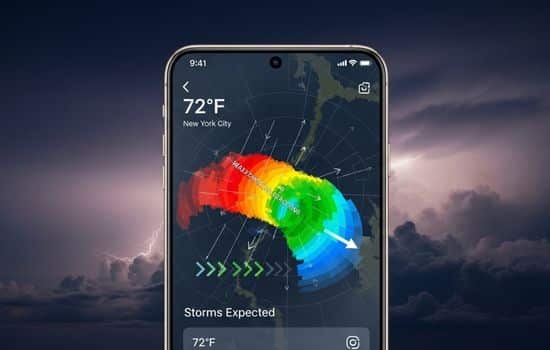
Visual weather tracking represents one of the most powerful features available in modern apps. High-resolution radar shows precipitation intensity, storm movement, and cloud patterns in stunning detail. Satellite imagery provides a bird’s-eye view of weather systems, allowing you to see exactly what’s heading your way.
Advanced apps offer animated radar that lets you scrub backward and forward through time, helping you understand storm trajectories and predict when conditions will improve or deteriorate. This visual approach makes complex meteorological data accessible to everyone, regardless of their scientific background.
Hyperlocal Forecasting Precision
Gone are the days of relying on city-wide forecasts that might not reflect conditions in your specific neighborhood. Modern weather apps use GPS technology and dense networks of weather stations to deliver incredibly precise location-based forecasts.
Some applications even incorporate crowd-sourced data from users, creating a real-time picture of actual conditions on the ground. This combination of official meteorological data and community reports creates forecasts that are remarkably accurate at the street level.
Multi-Day Extended Forecasts
While short-term accuracy is crucial, having visibility into weather patterns days or even weeks ahead helps with long-term planning. Quality weather apps provide detailed extended forecasts that include temperature ranges, precipitation probabilities, wind speeds, and humidity levels.
The best applications clearly communicate forecast confidence levels, helping you understand when predictions are highly reliable and when uncertainty increases due to complex atmospheric conditions.


🌪️ Storm Tracking Capabilities That Keep You Protected
When severe weather threatens, having advanced storm tracking features becomes absolutely essential. The best weather applications excel at identifying, tracking, and alerting users about dangerous conditions before they arrive.
Severe Weather Alerts and Notifications
Instant alerts for tornadoes, hurricanes, flash floods, severe thunderstorms, and other dangerous weather events can give you precious time to take protective action. Premium weather apps source these warnings directly from official meteorological services and deliver them faster than traditional media.
Customizable notification settings let you decide which types of alerts you want to receive and for which locations. This flexibility ensures you stay informed about conditions that matter to you without being overwhelmed by irrelevant notifications.
Lightning Detection Systems
For outdoor enthusiasts, event organizers, and construction workers, lightning represents one of the most immediate weather dangers. Advanced apps include real-time lightning detection networks that show exactly where strikes are occurring and predict lightning risk in your area.
These systems can alert you when lightning is within a dangerous proximity, giving you time to seek shelter before the threat arrives overhead. Some apps even provide a safety countdown, telling you when it’s safe to resume outdoor activities after a storm passes.
Hurricane and Tropical Storm Tracking
For coastal residents and travelers, hurricane tracking features provide invaluable information during tropical storm season. Detailed cone projections, wind speed forecasts, and landfall predictions help you prepare or evacuate if necessary.
The best apps update hurricane tracks as new forecast models become available, often multiple times per day during active storm situations. Historical storm paths and intensity data provide context for understanding how current systems compare to past events.
📊 Understanding Weather Data Presentation
Raw meteorological data can be overwhelming and difficult to interpret without proper context. The most effective weather apps excel at presenting complex information in intuitive, visually appealing formats that anyone can understand.
Interactive Weather Maps
Layered map interfaces allow you to toggle between different data types—temperature, precipitation, wind, pressure, humidity, and more. This interactivity helps you build a comprehensive understanding of atmospheric conditions and how different factors interact.
Zoom capabilities let you examine weather patterns at multiple scales, from continental systems down to neighborhood-level detail. Time sliders enable you to watch weather evolve over hours or days, making patterns and trends immediately obvious.
Hourly Breakdowns and Minute-by-Minute Precipitation
Sometimes you need to know more than just whether it will rain today. Hourly forecasts show how conditions will change throughout the day, helping you time outdoor activities between weather events.
Minute-by-minute precipitation forecasts take this granularity even further, predicting exactly when rain will start and stop in your location. This feature proves incredibly useful for timing runs, walks, or quick errands between showers.
🌍 Global Coverage vs. Regional Specialization
Different weather apps take varying approaches to geographic coverage. Some aim for worldwide functionality, while others focus on providing exceptional service within specific regions or countries.
Global apps offer tremendous convenience for travelers, providing consistent weather information regardless of where you’re located. However, they may not incorporate region-specific data sources or alert systems that local apps leverage.
Regional specialists often deliver superior accuracy within their coverage areas by integrating local weather station networks, regional meteorological services, and area-specific forecasting models. If you rarely travel internationally, a regionally focused app might serve you better than a global alternative.
💡 Additional Features That Enhance Weather Apps
Beyond core forecasting capabilities, many weather applications include supplementary features that add significant value for specific user groups.
Air Quality Monitoring
Air pollution has become a major health concern in many urban areas worldwide. Weather apps increasingly include air quality indices that measure pollutants like particulate matter, ozone, and nitrogen dioxide.
These measurements help people with respiratory conditions, parents of young children, and health-conscious individuals make informed decisions about outdoor activities. Some apps provide health recommendations based on current air quality levels.
UV Index and Sun Position
Understanding ultraviolet radiation intensity helps prevent sunburn and reduces long-term skin cancer risk. Weather apps that include UV forecasts tell you when sun protection is necessary and how strong that protection should be.
Sun position tracking appeals to photographers seeking golden hour lighting, solar panel owners optimizing energy production, and gardeners planning sun exposure for plants.
Astronomy and Stargazing Information
Clear sky forecasts, moon phase tracking, and astronomical event notifications serve amateur astronomers and anyone who enjoys celestial observation. These features predict cloud cover hours or days in advance, helping you plan stargazing sessions.
Marine and Aviation Weather
Specialized weather information for boaters includes tide predictions, wave heights, water temperatures, and marine wind forecasts. Aviation enthusiasts and pilots benefit from ceiling heights, visibility reports, and turbulence predictions.
🔐 Privacy Considerations With Weather Applications
Weather apps require location access to provide accurate forecasts, but this raises legitimate privacy questions. Understanding how different applications handle your data helps you make informed choices about which services to trust.
Reputable apps clearly explain their data collection practices and give users control over what information is shared. Some applications offer privacy-focused modes that provide weather information without storing location history or selling data to advertisers.
Reading privacy policies might seem tedious, but it’s worth understanding whether your location data, usage patterns, and personal information are being monetized or shared with third parties.
📱 Choosing the Right Weather App for Your Needs
With hundreds of weather applications available across iOS and Android platforms, selecting the right one can feel overwhelming. Your ideal choice depends on several personal factors.
Casual users who simply want to know tomorrow’s temperature and precipitation chances can thrive with straightforward apps offering basic forecasts and simple interfaces. These lightweight options conserve battery and storage space while delivering essential information.
Weather enthusiasts and professionals require advanced features like multiple forecast models, detailed atmospheric data, and sophisticated visualization tools. These power-user apps offer depth and customization that justify their complexity and often premium pricing.
Location matters significantly when choosing a weather app. Residents of storm-prone regions should prioritize applications with robust severe weather alerting and tracking. Those in stable climates might focus instead on extended forecast accuracy and air quality monitoring.
🚀 The Future of Weather Forecasting Technology
Artificial intelligence and machine learning are revolutionizing weather prediction accuracy. These technologies analyze vast datasets to identify patterns humans might miss, improving forecast reliability especially in the medium-term range of three to ten days.
Increased satellite coverage and next-generation radar systems provide meteorologists with unprecedented atmospheric visibility. As this technology filters into consumer applications, users benefit from forecasts based on richer, more detailed data.
Crowd-sourced weather reporting continues expanding, with apps collecting real-time observations from millions of users worldwide. This democratization of weather data creates hyperlocal accuracy that traditional forecasting methods can’t match.
Climate modeling integration may soon help weather apps contextualize daily forecasts within longer-term climate trends, helping users understand whether current conditions represent normal variability or significant departures from historical patterns.
🌈 Making Weather Apps Part of Your Daily Routine
Integrating weather awareness into your daily life doesn’t require obsessive checking. Smart notification settings ensure you’re alerted to significant changes without constant manual monitoring.
Morning weather checks help you dress appropriately and plan your day effectively. Many people develop a routine of reviewing the hourly forecast over breakfast, identifying windows for outdoor activities or potential weather-related disruptions.
Before making plans days or weeks in advance, consulting extended forecasts provides valuable input for scheduling outdoor events, travel, or weather-dependent activities. While long-range predictions carry more uncertainty, they still offer useful guidance.
Sharing weather information with friends and family keeps everyone informed and safe. Many apps include features for sending forecasts or alerts to contacts, particularly useful when severe weather threatens loved ones in different locations.
⚡ Maximizing Battery Life While Using Weather Apps
Weather applications can drain smartphone batteries quickly, especially when using GPS, frequent updates, and animated radar. Several strategies help minimize power consumption while maintaining access to critical information.
Adjusting update frequency balances currency with battery preservation. Most users don’t need minute-by-minute updates except during active weather events. Setting longer intervals between automatic refreshes significantly extends battery life.
Background app refresh allows weather applications to update even when not actively open, ensuring fresh data when you check. However, disabling this feature except for your primary weather app conserves considerable power.
Widget usage provides at-a-glance weather information without opening the full application. Well-designed widgets display essential data while consuming minimal resources compared to repeatedly launching the complete app.
🌟 The Value of Accurate Weather Information
Weather apps deliver remarkable value considering many offer free versions with comprehensive features. The peace of mind from knowing exactly what conditions to expect and receiving timely severe weather warnings far exceeds any subscription cost for premium tiers.
Economic benefits extend beyond safety. Accurate forecasts help businesses optimize operations, reduce weather-related disruptions, and protect valuable assets from storm damage. Agricultural operations rely heavily on detailed precipitation and temperature predictions for crop management.
Personal productivity improves when you can plan around weather confidently. Cancelled outdoor events, ruined picnics, and unexpected drenching walks all become less frequent when you have reliable forecasting at your fingertips.
The environmental awareness these apps foster shouldn’t be underestimated either. Daily engagement with weather data helps users recognize climate patterns, understand seasonal variations, and develop deeper appreciation for atmospheric dynamics shaping our world.
Weather prediction technology has advanced tremendously over recent decades, and smartphone applications have democratized access to this information in ways previous generations couldn’t imagine. Taking advantage of these powerful tools helps you stay safe, plan effectively, and navigate our increasingly unpredictable atmospheric conditions with confidence and clarity.
