
Anúncios
Metal detector apps have transformed smartphones into powerful tools capable of detecting magnetic fields and metallic objects around you, offering convenience and practicality at your fingertips.
Anúncios

Whether you’re searching for lost jewelry in your backyard, locating metal studs behind walls during home renovations, or simply exploring the fascinating world of treasure hunting, metal detector applications provide an accessible entry point. These innovative tools leverage the built-in magnetometer sensor found in most modern smartphones to measure magnetic field strength and identify metallic objects nearby.
The technology behind these apps might seem complex, but the user experience is remarkably straightforward. With intuitive interfaces and real-time feedback, anyone can start detecting metals within seconds of downloading the app. Let’s explore everything you need to know about metal detector apps, from how they work to practical applications that can enhance your daily life. 🔍
Anúncios
How Metal Detector Apps Actually Work
The science behind metal detector apps is grounded in magnetometry. Every smartphone equipped with a compass feature contains a magnetometer—a sensor designed to detect the Earth’s magnetic field for navigation purposes. Metal detector apps cleverly repurpose this sensor to identify disturbances in the surrounding magnetic field caused by ferromagnetic materials like iron, steel, and nickel.
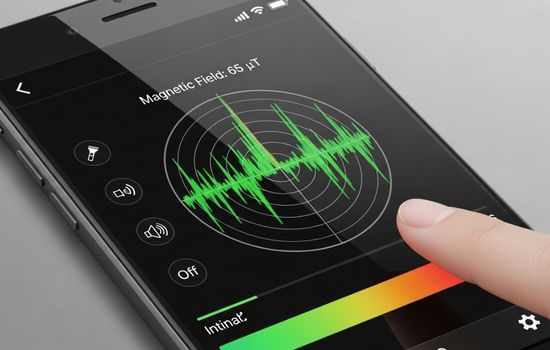
When you bring your phone near a metallic object, the magnetometer registers changes in magnetic field intensity. The app processes this data and displays it through visual indicators, numerical readings measured in microteslas (µT), and often audible alerts that increase in frequency as you approach metal objects. This real-time feedback system creates an intuitive detection experience similar to professional metal detectors.
Understanding Magnetic Field Measurements
Metal detector apps typically display readings between 30 to 60 microteslas (µT) under normal conditions, representing Earth’s natural magnetic field. When metal is detected, these values can spike dramatically—sometimes exceeding 100 µT or more depending on the size, type, and proximity of the metallic object. Learning to interpret these fluctuations is key to effective metal detection with your smartphone.
Different metals produce varying magnetic signatures. Ferromagnetic materials like iron and steel generate strong, easily detectable signals. Paramagnetic metals such as aluminum create weaker responses, while diamagnetic materials like copper and gold produce minimal to no magnetic field disturbance, making them nearly impossible to detect with smartphone-based apps.
Practical Uses That Go Beyond Treasure Hunting
While the romantic notion of treasure hunting might initially attract users to metal detector apps, their practical applications extend far beyond searching for buried coins and lost rings. These versatile tools have found their way into various everyday scenarios where locating hidden metal objects proves invaluable.
Homeowners and DIY enthusiasts frequently use metal detector apps during renovation projects to locate metal studs, pipes, and electrical wiring concealed behind walls. This capability helps prevent costly mistakes when drilling or hammering, potentially avoiding punctured pipes or severed electrical cables. Contractors and electricians have also adopted these apps as quick preliminary scanning tools before using professional-grade equipment. ⚒️
Finding Lost Items With Precision
One of the most common uses involves recovering lost metallic items. Whether it’s a dropped earring in thick carpet, a fallen screw in a workshop, or keys buried in beach sand, metal detector apps provide a systematic search approach. By slowly sweeping your phone over the suspected area and monitoring the readings, you can pinpoint the exact location of hidden metal objects without random searching.
The apps prove particularly useful in outdoor environments where visual searching becomes impractical. Gardens, lawns, parks, and beaches present challenges where metal objects easily disappear beneath grass, leaves, or sand. A methodical grid search pattern using a metal detector app significantly increases recovery chances compared to visual inspection alone.


Choosing the Right Metal Detector App for Your Needs
The digital marketplace offers numerous metal detector applications, each with distinct features, interfaces, and capabilities. Selecting the appropriate app depends on your specific requirements, device compatibility, and desired functionality. Premium apps typically offer advanced features like calibration options, sensitivity adjustments, and detailed data logging, while free versions provide basic detection capabilities sufficient for casual users.
When evaluating metal detector apps, consider interface design and usability. The best applications present information clearly through intuitive gauges, color-coded indicators, and adjustable alert systems. Real-time responsiveness matters significantly—laggy apps that delay feedback compromise the detection experience and reduce effectiveness during searches.
Key Features to Look For
Calibration capability stands as one of the most important features in quality metal detector apps. Since different environments present varying baseline magnetic readings, the ability to calibrate the app to current conditions ensures accurate detection. Look for apps that allow quick recalibration with a single tap, adapting to your immediate surroundings.
Sensitivity adjustment options enable users to fine-tune detection parameters based on their objectives. Higher sensitivity settings detect smaller or more distant objects but may trigger more false positives from environmental magnetic interference. Lower sensitivity reduces noise but requires closer proximity to metal objects. Flexible sensitivity controls accommodate different search scenarios effectively.
Visual and audio feedback mechanisms enhance the user experience considerably. Graphical representations through needle gauges, bar graphs, or waveform displays provide intuitive interpretation of magnetic field strength. Complementary audio signals that intensify near metal objects allow hands-free operation, enabling you to focus on searching rather than constantly watching your screen. 📱
Limitations and Realistic Expectations
While metal detector apps offer remarkable convenience and functionality, understanding their limitations prevents disappointment and helps establish realistic expectations. Smartphone magnetometers, though sensitive, cannot match the power, depth penetration, or discrimination capabilities of dedicated professional metal detectors that cost hundreds or thousands of dollars.
Detection depth represents the most significant limitation. Metal detector apps typically detect objects only within a few centimeters to inches from the phone’s sensor. Large metallic items may register at slightly greater distances, but expecting to locate objects buried several inches underground proves unrealistic. Professional metal detectors utilize specialized coils and amplification systems that penetrate soil far more effectively than smartphone sensors.
Environmental Interference Factors
Magnetic interference from the surrounding environment frequently affects metal detector app performance. Electronic devices, electrical wiring, reinforced concrete, and even certain geological formations create background magnetic noise that can trigger false readings or mask genuine metal signatures. Operating near computers, televisions, power lines, or appliances often produces unreliable results.
Weather conditions and temperature variations can also influence magnetometer accuracy. Extreme temperatures may affect sensor calibration, while electromagnetic activity during storms introduces additional interference. For optimal performance, use metal detector apps in relatively stable, magnetically quiet environments away from obvious interference sources.
Maximizing Detection Success With Proper Technique
Effective metal detection with smartphone apps requires more than simply downloading an application—proper technique significantly impacts success rates. Understanding how to move your phone, interpret readings, and systematically search areas transforms casual users into proficient detectorists. 🎯
Begin every detection session by calibrating your app in an area you know contains no metal objects. This establishes a baseline reading for the current environment, improving accuracy when you transition to actual searching. Hold your phone steadily and move it slowly and methodically across the search area. Rapid movements or jerky motions create inconsistent readings that complicate interpretation.
Search Pattern Strategies
Systematic search patterns prevent missed areas and ensure thorough coverage. The grid method divides the search area into imaginary rows, sweeping the phone side to side while advancing forward incrementally. This approach works excellently for confined spaces like rooms or small yards. For larger outdoor areas, the spiral pattern starting from a central point and gradually expanding outward proves effective.
When you detect a signal, mark the location and approach from multiple angles to pinpoint the exact position. Magnetic fields don’t always align perfectly with the metal’s location due to field lines radiating outward. Triangulating from different directions helps narrow down the precise spot for excavation or retrieval.
Educational Value for Students and Enthusiasts
Metal detector apps serve as excellent educational tools for teaching fundamental physics concepts, particularly electromagnetism and sensor technology. Students gain hands-on experience with magnetic field measurement, data interpretation, and the scientific method through practical experimentation with these accessible applications.
Teachers incorporate metal detector apps into science curricula to demonstrate how magnetometers work, explore the properties of different materials, and investigate how magnetic fields behave around various objects. These interactive lessons engage students more effectively than purely theoretical instruction, fostering curiosity about technology and physics principles.
STEM Learning Opportunities
Beyond basic physics, metal detector apps introduce students to sensor technology, data visualization, and mobile application development concepts. Curious learners can research how magnetometers function at a technical level, understanding the Hall effect sensors or fluxgate magnetometers commonly used in smartphones. This exploration naturally leads to broader discussions about how everyday devices incorporate sophisticated scientific instruments.
Hobbyists and amateur scientists use metal detector apps for informal experiments and investigations. Mapping magnetic field variations across different locations, comparing metallic object signatures, or documenting interference patterns from various sources provides engaging activities that deepen understanding of electromagnetic phenomena in practical contexts. 🔬
Privacy and Safety Considerations
Using metal detector apps raises few privacy concerns compared to other mobile applications since they primarily access only the magnetometer sensor. However, reviewing permission requests before installation remains prudent. Legitimate metal detector apps require only sensor access and perhaps location services if they include mapping or logging features. Apps requesting unnecessary permissions like contacts, camera, or microphone access should be approached cautiously.
Safety considerations focus primarily on awareness of your surroundings during detection activities. Users concentrating on their phone screens while walking may overlook physical hazards like uneven terrain, obstacles, or traffic. When searching outdoor areas, maintain situational awareness and periodically look up from your device to assess your environment.
Responsible Detection Practices
Respect property rights and legal restrictions when using metal detector apps for treasure hunting or metal recovery. Private property requires owner permission before searching, and many public lands impose restrictions on metal detecting activities. Historical sites, archaeological areas, and protected lands typically prohibit metal detection to preserve cultural resources and prevent unauthorized excavation.
When you do locate and retrieve metallic objects, practice environmental responsibility. Fill any holes you dig, dispose of trash metal appropriately, and report significant finds to relevant authorities if they appear historically important. Responsible detection ensures continued access to public spaces and maintains positive relationships between hobbyists and land managers. 🌍
Future Developments in Detection Technology
The evolution of smartphone sensor technology promises enhanced capabilities for future metal detector applications. Improved magnetometer sensitivity, faster processing speeds, and integration with artificial intelligence could dramatically expand detection range, accuracy, and object discrimination. Some researchers explore combining magnetometer data with other sensors like ground-penetrating radar or advanced imaging technologies in specialized smartphone attachments.
Augmented reality (AR) integration represents an exciting frontier for metal detector apps. Imagine pointing your phone at the ground and seeing visual overlays indicating detected metal locations, depth estimates, and probable object types in real-time through your screen. Such technology could revolutionize both casual metal detecting and professional applications in construction, archaeology, and utility location services.
Comparing Apps With Professional Equipment
Understanding the relationship between metal detector apps and professional equipment helps users appreciate both the capabilities and limitations of smartphone-based detection. Professional metal detectors employ specialized coils that generate electromagnetic fields and detect the resulting eddy currents in metallic objects—a fundamentally different approach than passive magnetometer measurements used by apps.
This technological difference explains why professional detectors achieve superior depth penetration, better target discrimination, and more reliable performance in challenging conditions. However, professional equipment comes with substantial costs, ranging from one hundred to several thousand dollars, plus the inconvenience of carrying dedicated devices. Metal detector apps excel in spontaneous situations where you need quick detection without specialized equipment.
When to Upgrade to Professional Tools
Casual users finding occasional lost items or performing simple home detection tasks rarely need professional equipment—metal detector apps provide sufficient capability for these scenarios. However, serious treasure hunters, frequent beach searchers, or individuals conducting regular detection activities benefit significantly from investing in dedicated metal detectors that deliver superior performance and specialized features like target identification and depth indication.
Some enthusiasts adopt a hybrid approach, using metal detector apps for preliminary surveys and quick checks while reserving professional equipment for thorough searches and serious hunting sessions. This strategy balances convenience with capability, ensuring you have appropriate tools for different detection scenarios. ⚖️
Troubleshooting Common Detection Issues
Users occasionally encounter problems when using metal detector apps, most of which stem from environmental factors, device limitations, or technique issues rather than app defects. Understanding common problems and their solutions enhances detection success and reduces frustration during searches.
Erratic or constantly fluctuating readings typically indicate magnetic interference from nearby electronic devices, metal structures, or electromagnetic sources. Moving to a different location away from obvious interference sources usually resolves these issues. If problems persist, try recalibrating the app or restarting your phone to reset the magnetometer sensor.
Device-Specific Considerations
Not all smartphones contain equally sensitive magnetometers—sensor quality varies between manufacturers and models. Budget devices may incorporate less precise sensors that limit detection accuracy and range. If your metal detector app consistently underperforms despite proper technique and favorable conditions, hardware limitations might be the cause. Researching your specific phone model’s magnetometer specifications can clarify whether sensor quality contributes to detection challenges.
Phone cases, especially those with magnetic closures or metal components, interfere with magnetometer readings and severely compromise metal detector app functionality. Remove protective cases before conducting detection activities to ensure unobstructed sensor operation. Screen protectors and non-metallic cases typically don’t affect performance significantly.
Making Metal Detection Part of Your Adventures
Incorporating metal detector apps into outdoor activities and adventures adds an extra dimension of discovery and engagement. Beach trips become opportunities to search for lost jewelry and buried treasures along the shore. Hiking excursions gain an investigative element as you explore historical trails where old metallic artifacts might remain. Even urban explorations through parks and public spaces transform into casual treasure hunts with potential for unexpected finds. 🏖️
Family activities benefit particularly from metal detection’s inclusive nature. Children find the treasure hunting aspect exciting and engaging, encouraging outdoor exploration and physical activity. Adults appreciate the blend of technology, problem-solving, and potential for genuine discoveries. Metal detector apps facilitate quality family time that combines education, exercise, and entertainment in a single accessible activity.
The low barrier to entry makes metal detecting accessible to virtually everyone with a smartphone. Unlike hobbies requiring expensive equipment, specialized training, or particular physical capabilities, metal detector apps democratize the experience of detection and discovery. This accessibility has introduced countless individuals to the satisfaction of locating hidden objects and solving the mystery of where items have concealed themselves.
Understanding the Science Makes You a Better Detector
Developing a deeper understanding of the electromagnetic principles underlying metal detection enhances practical skills and improves results. Knowledge about how different materials interact with magnetic fields informs search strategies and helps interpret ambiguous readings. Users who invest time learning about magnetism, ferromagnetism, and sensor technology become more effective and successful in their detection activities.
This educational journey doesn’t require advanced physics degrees—numerous accessible resources explain relevant concepts in understandable terms. Online tutorials, physics websites, and even the help sections within quality metal detector apps provide foundational knowledge that translates directly into improved detection technique and more satisfying outcomes. 📚
The intersection of practical application and scientific understanding represents one of the most rewarding aspects of using metal detector apps. You’re not merely pushing buttons on a screen—you’re actively engaging with electromagnetic phenomena, interpreting sensor data, and applying scientific principles to solve real-world challenges. This combination of theory and practice creates a richer, more meaningful experience than either element would provide independently.
