
Anúncios
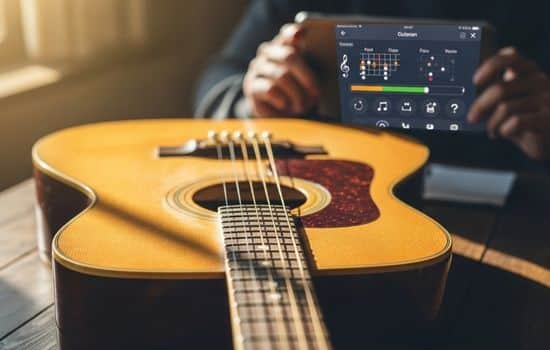
Learning guitar has never been easier, thanks to modern mobile apps designed to guide beginners and advanced players through their musical journey with interactive lessons and real-time feedback.

Whether you’re picking up a guitar for the first time or looking to refine your skills, mobile applications have revolutionized the way we learn musical instruments. These apps transform your smartphone into a personal guitar teacher, available 24/7 wherever you are.
Anúncios
The beauty of using an app to learn guitar lies in its flexibility and personalized approach. Unlike traditional lessons that require scheduled appointments and travel, mobile apps adapt to your pace, learning style, and busy schedule, making guitar education accessible to everyone.
🎸 Why Choose a Mobile App to Learn Guitar
The traditional approach to learning guitar often involves hiring a private instructor or attending group classes. While these methods have their merits, they come with significant limitations that mobile apps elegantly solve.
Anúncios
Cost is one of the most compelling reasons to consider an app-based learning approach. Private guitar lessons can range from $30 to $100 per hour, quickly adding up to thousands of dollars annually. In contrast, most guitar learning apps offer comprehensive courses for a fraction of that cost, often with monthly subscriptions under $20.
Flexibility represents another major advantage. Life gets busy, and committing to fixed lesson times can be challenging. With a guitar app, you practice when it suits you—early morning before work, during lunch breaks, or late at night when inspiration strikes.
The technology behind modern guitar apps is genuinely impressive. Many use advanced audio recognition to listen to your playing in real-time, providing instant feedback on accuracy, timing, and technique. This immediate response helps you correct mistakes as they happen, reinforcing proper habits from the start.
📱 Key Features That Make Guitar Apps Effective
Not all guitar learning apps are created equal. The most effective ones share certain features that enhance the learning experience and keep students motivated throughout their journey.
Interactive Listening Technology
The best guitar apps utilize your device’s microphone to actually hear what you’re playing. This technology analyzes your notes, chords, and strumming patterns, comparing them to the correct version. You’ll receive color-coded feedback showing which notes were accurate and which need improvement.
This feature essentially gives you a virtual teacher who never gets tired or impatient. The app listens with perfect pitch every single time, ensuring you develop accurate playing habits from the beginning.
Structured Curriculum and Progressive Learning
Quality guitar apps organize content into logical, progressive lessons. You start with fundamental concepts like holding the guitar correctly, basic chords, and simple strumming patterns. As you demonstrate competency, the app gradually introduces more complex techniques.
This scaffolded approach prevents overwhelm while ensuring you build a solid foundation. Each lesson builds on previous knowledge, creating a coherent learning pathway from absolute beginner to intermediate player.
Song Library with Popular Music
Learning songs you actually enjoy makes practice feel less like work and more like entertainment. Leading guitar apps include extensive libraries featuring hundreds or thousands of popular songs across various genres.
Playing recognizable music provides powerful motivation. There’s incredible satisfaction in successfully playing a song you’ve heard on the radio, and this achievement encourages continued practice and improvement.


Video Demonstrations and Visual Guides
Visual learning is crucial for mastering guitar technique. Apps incorporate high-quality video demonstrations showing proper hand positioning, finger placement, and strumming techniques from multiple angles.
These videos can be paused, rewound, and replayed as many times as needed. This unlimited access to visual instruction helps you understand nuances that would be difficult to grasp through text alone.
Progress Tracking and Achievement Systems
Modern guitar apps gamify the learning experience with progress bars, achievement badges, and skill assessments. These elements tap into our natural desire for accomplishment and provide tangible evidence of improvement.
Tracking your progress also helps identify areas needing additional practice. If you’re consistently struggling with a particular chord transition or technique, the app highlights this, allowing you to focus your efforts where they’ll have the greatest impact.
🎯 Getting Started: Your First Week with a Guitar App
Beginning your guitar journey can feel intimidating, but a well-designed app makes those first steps surprisingly manageable. Here’s what you can typically expect during your initial week.
Most apps start with setup and orientation. You’ll adjust audio settings so the app can accurately hear your guitar, choose whether you’re playing acoustic or electric, and select your skill level. Don’t worry if you’re an absolute beginner—apps are designed with you in mind.
Your first actual lessons focus on fundamentals. You’ll learn how to hold the guitar comfortably, how to position your hands correctly, and how to read basic chord diagrams. These foundational elements might seem simple, but they’re critical for everything that follows.
By day two or three, you’re typically learning your first chords. Most apps start with relatively easy open chords like E minor, A minor, or D major. The app will demonstrate proper finger placement, then listen as you attempt the chord, providing feedback on your accuracy.
Simple strumming patterns come next. You’ll practice maintaining steady rhythm while transitioning between the chords you’ve learned. This coordination between left and right hands takes practice, but apps break it down into manageable steps.
By the end of your first week, many learners can play simplified versions of actual songs using just two or three chords. This early success is incredibly motivating and proves you’re making real progress.
💡 Tips for Maximizing Your Learning with Guitar Apps
While guitar apps provide excellent structure and instruction, how you use them significantly impacts your results. These strategies will help you get the most from your app-based learning.
Consistency Beats Intensity
Playing guitar for 15-20 minutes daily produces better results than cramming an hour-long session once weekly. Regular practice reinforces muscle memory and helps your brain consolidate new skills.
Most apps send practice reminders, which you should definitely enable. These gentle nudges help establish a consistent routine, transforming guitar practice from an occasional activity into a regular habit.
Focus on Quality Over Speed
Apps track your progress and unlock new content as you advance, but resist the temptation to rush through lessons just to reach the next level. Taking time to truly master each technique pays dividends later.
If you’re consistently making mistakes on a particular exercise, repeat it until you can play it correctly at least five times in a row. This thoroughness prevents developing bad habits that are difficult to correct later.
Supplement App Learning with Additional Resources
While apps provide comprehensive instruction, complementing them with other resources enriches your understanding. Watch YouTube videos about guitar theory, join online guitar communities, or occasionally consult with an experienced player.
This multi-faceted approach exposes you to different teaching styles and perspectives, helping concepts click in new ways.
Record Yourself Playing
Periodically record your practice sessions and listen back critically. You’ll notice mistakes and areas for improvement that aren’t apparent while you’re concentrating on playing.
These recordings also serve as progress markers. Comparing a recording from today with one from a month ago provides powerful motivation by demonstrating just how much you’ve improved.
🎵 Common Challenges and How Apps Help Overcome Them
Every guitar learner encounters obstacles along the way. Understanding these common challenges and how apps address them can help you push through difficult periods.
Finger Pain and Building Calluses
Nearly every beginner experiences sore fingertips when starting guitar. The steel or nylon strings press into soft skin, causing discomfort. This is completely normal and temporary.
Guitar apps acknowledge this reality and structure early lessons to build stamina gradually. Rather than pushing you to practice until your fingers are too sore to continue, apps encourage shorter, more frequent sessions that allow your fingertips to develop calluses progressively.
Chord Transition Difficulties
Smoothly changing between chords represents one of the biggest hurdles for beginners. Your fingers seem unwilling to move to the correct positions quickly enough, resulting in awkward pauses and buzzing strings.
Apps address this with dedicated transition exercises that isolate specific chord changes. You’ll practice moving between just two chords repeatedly, gradually increasing speed as muscle memory develops. This focused approach is far more effective than simply attempting to play full songs before you’re ready.
Maintaining Motivation During Plateaus
Learning curves aren’t linear. You’ll experience periods of rapid improvement followed by frustrating plateaus where progress seems to stall. These plateaus are normal but can be demotivating.
Guitar apps combat motivation loss through variety and achievement systems. When you’re stuck on a particular technique, the app might suggest trying a new song or exploring a different skill. The constant stream of new content and achievement notifications keeps the experience fresh and rewarding.
🌟 Beyond Basics: Intermediate Skills Through Apps
Guitar apps aren’t just for beginners. As you advance, quality apps continue providing value by teaching intermediate and even some advanced techniques.
Barre chords represent a significant milestone for developing guitarists. These challenging chord shapes require pressing multiple strings with one finger while forming shapes with the remaining fingers. Apps use targeted exercises to build the finger strength and precision necessary for clean barre chords.
Lead guitar and soloing introduce melodic playing beyond rhythm guitar. Apps teach scales, note locations across the fretboard, and improvisation concepts. Interactive exercises help you develop the speed and accuracy needed for lead playing.
Fingerpicking patterns add sophistication to your playing. Rather than strumming chords, fingerpicking involves plucking individual strings in specific patterns. Apps demonstrate these patterns visually and listen to your attempts, ensuring you develop clean, consistent fingerpicking technique.
Music theory integration helps you understand what you’re playing rather than just memorizing patterns. Quality apps gradually introduce concepts like chord construction, key signatures, and scale relationships, empowering you to eventually create your own music.
🔊 Choosing Between Acoustic and Electric for App Learning
If you don’t yet own a guitar, you might wonder which type works best with learning apps. Both acoustic and electric guitars work excellently with apps, but each has distinct advantages.
Acoustic guitars require no additional equipment beyond the instrument itself. You can pick it up and start playing immediately, making them convenient for practice anywhere. The slightly wider neck spacing can actually help beginners develop accurate finger placement.
Electric guitars are often easier on the fingers due to lighter gauge strings and lower action (string height). This can make those early practice sessions less painful, encouraging longer practice times. However, you’ll need an amplifier to hear yourself properly, adding cost and complexity.
Most guitar apps work equally well with both types. The audio recognition technology adapts to either acoustic or electric guitar sounds, providing accurate feedback regardless of your choice.
🏆 Real Results: What to Expect After Consistent Practice
Setting realistic expectations helps maintain motivation throughout your guitar learning journey. Here’s what consistent app-based practice typically achieves at various milestones.
After one month of regular practice (15-20 minutes daily), most learners can play basic open chords with reasonable accuracy and perform simple two or three chord songs. Your chord transitions are still slow, but you’re making recognizable music.
Three months of consistent practice typically brings smoother chord changes, a repertoire of 10-15 songs, and introduction to basic barre chords and fingerpicking patterns. You’re beginning to feel like a “real” guitar player.
Six months of dedicated practice usually produces a solid intermediate player who can learn new songs relatively quickly, play moderately complex chord progressions, and has developed personal musical preferences and style.
One year of regular app-based learning can take you from complete beginner to confident intermediate player with dozens of songs in your repertoire, solid rhythm and lead skills, and the ability to learn new music independently.
These timelines assume consistent, quality practice. Your mileage may vary based on previous musical experience, natural aptitude, and practice frequency, but these benchmarks represent realistic expectations for most learners.
🎁 The Social Dimension: Connecting with Other Learners
Learning guitar through an app might seem like a solitary activity, but many apps incorporate social features that connect you with a community of fellow learners.
In-app communities allow you to share achievements, ask questions, and exchange tips with other users at similar skill levels. This connection provides encouragement during challenging periods and celebrates your successes with people who understand the journey.
Some apps include challenge modes where you compete against other players on specific songs or exercises. This friendly competition adds an extra motivation layer and pushes you to refine your skills.
Video sharing features let you post recordings of your playing for feedback from more experienced players. This constructive criticism accelerates improvement by identifying issues you might not notice yourself.
🚀 Taking Your Skills Beyond the App
While guitar apps provide excellent foundation and structure, eventually you might want to expand beyond app-based learning. The skills you’ve developed create numerous opportunities.
Playing with others represents the natural next step. Once you’re comfortable with basic chords and rhythm, seek out local jam sessions, open mic nights, or other musicians interested in informal collaboration. Playing with others dramatically improves your timing, listening skills, and musical communication.
Occasional lessons with a human instructor can complement your app learning beautifully. An experienced teacher can assess your technique, identify bad habits the app might miss, and provide personalized guidance tailored to your specific goals and challenges.
Creating original music becomes possible once you’ve developed solid foundational skills. The music theory and chord knowledge gained through app learning provides the tools to compose your own songs and express your unique musical voice.
Recording your music, whether simple phone recordings or more sophisticated home studio productions, allows you to document your progress and share your music with friends, family, or online audiences.
✨ Your Musical Journey Starts Now
Learning guitar through a mobile app represents one of the most accessible, affordable, and effective ways to develop musical skills in today’s world. The combination of structured curriculum, interactive feedback, and flexible scheduling removes traditional barriers that have kept countless people from pursuing their musical dreams.
The guitar has been bringing joy to players and listeners for centuries. Whether you dream of performing on stage, playing around campfires with friends, or simply enjoying the meditative practice of creating music, a guitar learning app can guide you from your first chord to musical proficiency.
Your fingers might be sore after those first practice sessions. Some chord transitions will feel impossibly difficult at first. There will be days when you feel like you’re not improving. But if you persist—practicing consistently, following the app’s guidance, and maintaining patience with yourself—you’ll develop a skill that brings lifetime satisfaction.
The guitar you’ve been meaning to pick up is waiting. The songs you want to play are ready to be learned. The app that will guide you through every step is just a download away. Your musical journey doesn’t require years of preparation or perfect circumstances. It starts with a single decision to begin, followed by the consistent small actions that transform beginners into musicians.
Download a guitar learning app today, tune your guitar, and play that first chord. You’re not just learning an instrument—you’re unlocking a form of self-expression and creativity that will enrich your life in ways you’re only beginning to imagine. Welcome to the wonderful world of guitar playing. 🎸
