
Anúncios
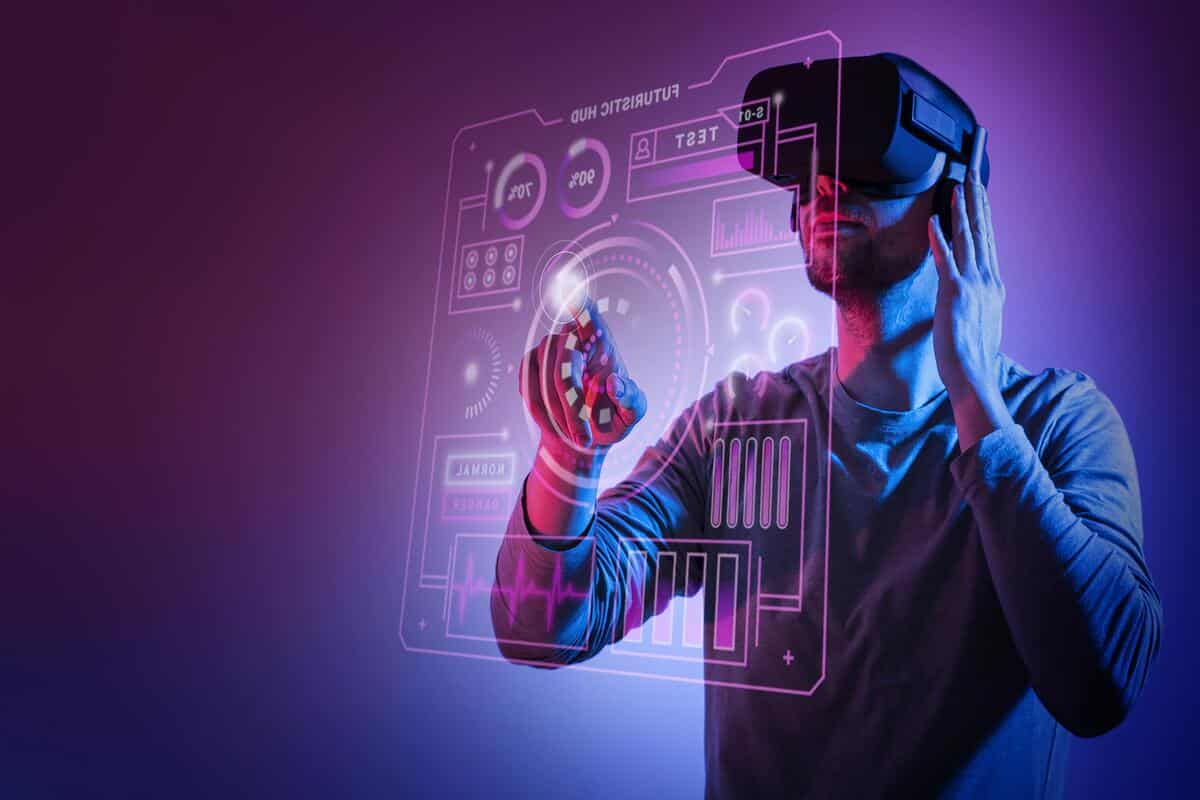
Augmented Reality (AR) and Virtual Reality (VR) are revolutionizing how we experience narratives, transforming passive audiences into active participants within immersive digital worlds. 🌐
The way we consume stories has evolved dramatically throughout human history. From oral traditions around campfires to written manuscripts, from cinema screens to streaming platforms, each technological leap has fundamentally altered our relationship with narratives. Now, we stand at the precipice of perhaps the most significant transformation yet: the convergence of storytelling with AR and VR technologies.
Anúncios
These immersive technologies aren’t just changing how stories are told—they’re redefining what a story can be. Instead of watching characters navigate challenges from a distance, audiences can now step into their shoes, explore fictional environments with unprecedented freedom, and influence narrative outcomes in real-time. This shift represents more than a technological upgrade; it’s a paradigm shift in human communication and artistic expression.
🎭 Breaking Down the Fourth Wall: What Makes AR and VR Storytelling Different
Traditional storytelling has always maintained a barrier between the audience and the narrative. Whether reading a book, watching a film, or playing a conventional video game, consumers remain fundamentally separate from the story world. AR and VR technologies dissolve this barrier in fundamentally different but equally transformative ways.
Anúncios
Virtual Reality creates entirely synthetic environments that replace your physical surroundings. When you don a VR headset, you’re transported to another realm—whether that’s a fantastical kingdom, a historical event, or an abstract conceptual space. The immersion is complete: your field of vision is filled with the virtual world, spatial audio surrounds you, and motion tracking allows natural interaction with digital objects.
Augmented Reality takes a different approach by overlaying digital elements onto your real-world environment. Through smartphone screens or specialized glasses, AR blends fiction with reality, allowing story elements to coexist with your physical space. A character might appear sitting on your actual couch, or clues to a mystery might be hidden around your neighborhood.
This fundamental difference creates distinct storytelling opportunities. VR excels at transportation and total immersion, making it ideal for epic adventures, emotional journeys, and experiences that benefit from complete environmental control. AR shines in stories that play with the boundary between real and imagined, creating magical realism experiences and location-based narratives that transform familiar spaces into story worlds.
📚 The Evolution of Narrative: From Linear to Spatial Storytelling
Traditional narratives follow a linear path: beginning, middle, and end. Even interactive stories with branching paths ultimately guide audiences through predetermined sequences. Immersive technologies introduce spatial storytelling—a multidimensional narrative approach where story elements exist simultaneously in space rather than sequentially in time.
In a VR story environment, multiple narrative threads might unfold simultaneously in different areas. You might witness a crucial conversation between characters in one room while overhearing important exposition from another direction. Where you choose to direct your attention becomes an act of curation, making each viewer’s experience unique even when the story content remains consistent.
This spatial approach demands new narrative techniques. Writers must consider 360-degree environments rather than framed shots. Directors must guide attention without traditional camera control. Sound designers create spatial audio landscapes where sonic cues direct focus. The result is a narrative form that borrows from theater’s spatial staging, video games’ environmental storytelling, and cinema’s dramatic techniques while remaining distinctly its own medium.
The Challenge of Narrative Control
One of the most significant challenges facing immersive storytellers is balancing freedom with narrative coherence. Too much control feels restrictive and diminishes immersion; too little leaves audiences confused or causes them to miss crucial story beats. Successful immersive narratives find creative solutions to this tension.
Some experiences use environmental design to naturally guide attention—placing light sources strategically, using color contrast, or employing spatial audio cues. Others embrace non-linear structures where narrative comprehension doesn’t depend on witnessing every element. Still others integrate story progression with exploration mechanics, rewarding curiosity while ensuring essential plot points aren’t missed.
🎮 Gaming the System: How Video Games Paved the Way
The video game industry has been exploring interactive narrative for decades, making it the unexpected pioneer for AR and VR storytelling techniques. Games have long grappled with balancing player agency against narrative structure, environmental storytelling, and creating emotional resonance within interactive frameworks.
Many techniques now employed in immersive storytelling originated in game design. Environmental narratives—where players piece together stories from spatial clues rather than explicit exposition—translate perfectly to VR exploration. Branching dialogue systems give users meaningful choices without requiring complete story restructuring. Quest mechanics provide structural scaffolding that guides exploration while maintaining the illusion of freedom.
However, storytelling in AR and VR extends beyond gaming conventions. While games prioritize challenge and achievement, narrative-focused experiences emphasize emotional resonance, thematic depth, and artistic expression. The most successful immersive stories borrow gaming’s interactive vocabulary while pursuing cinema’s emotional sophistication and literature’s narrative complexity.
🎬 Industries Embracing Immersive Narratives
The revolution in storytelling isn’t confined to entertainment. Multiple industries are discovering how immersive narratives create powerful experiences that educate, persuade, and transform understanding.
Entertainment and Media
Film studios and streaming platforms are investing heavily in VR experiences that extend their intellectual properties. These aren’t simply 360-degree videos but interactive story worlds where fans explore beloved fictional universes from new perspectives. Music artists create immersive concert experiences that transcend physical venue limitations, combining performance with fantastical visual narratives.
Education and Training
Educational institutions are discovering that immersive storytelling creates powerful learning experiences. History comes alive when students can walk through ancient civilizations. Complex scientific concepts become tangible when visualized in three-dimensional space. Medical students practice procedures in risk-free virtual environments with narrative scenarios that build diagnostic skills.
Journalism and Documentary
Immersive journalism places audiences at the center of important stories, creating empathy through presence. Viewers can experience refugee camps, environmental disasters, or social justice issues with an immediacy that traditional reporting cannot match. This “empathy machine” quality raises important questions about ethics and representation while demonstrating storytelling’s potential for social impact.
Marketing and Brand Experiences
Brands are crafting immersive narratives that transform advertising from interruption to destination. Rather than viewing a commercial, consumers might explore a story world that embodies brand values. AR applications allow potential customers to visualize products in their actual spaces, integrating practical utility with narrative-driven brand experiences.
⚡ Technical Foundations: The Hardware Making It Possible
The immersive storytelling revolution depends on rapidly advancing hardware that’s becoming more accessible, powerful, and user-friendly. Understanding the technology landscape helps contextualize both current possibilities and future potential.
Modern VR headsets range from premium PC-connected devices offering the highest fidelity experiences to standalone units that balance performance with convenience. Display resolution has improved dramatically, reducing the “screen door effect” that plagued early devices. Field of view continues expanding, enhancing peripheral vision and increasing immersion. Refresh rates now minimize motion sickness, making VR comfortable for extended experiences.
Hand tracking and controller technologies have evolved beyond simple pointing devices. Contemporary systems track individual finger movements, enabling natural gestures and fine manipulation. Haptic feedback provides tactile sensations that reinforce the illusion of touching virtual objects. Full-body tracking systems, while still emerging, promise complete physical presence within virtual spaces.
AR technology follows a different trajectory, with smartphone-based experiences currently reaching the largest audiences. Dedicated AR glasses remain an emerging category, with various companies developing devices that blend digital content with reality through transparent displays. As these devices become lighter, more affordable, and socially acceptable, AR storytelling will move from phone screens to persistent augmented layers over everyday vision.
🌟 Pioneering Experiences: Stories Pushing the Boundaries
Several groundbreaking experiences demonstrate immersive storytelling’s current state and future potential. These projects showcase different approaches to narrative in virtual spaces, each solving creative challenges in innovative ways.
Animated VR experiences have proven particularly successful, as stylized visuals bypass the “uncanny valley” problem that plagues photorealistic human characters. These stories use visual metaphor and expressive design to convey emotion without relying on subtle facial animations that current technology struggles to render convincingly.
Documentary experiences leverage VR’s presence to create powerful testimonials and investigative journalism. By placing viewers in actual locations—whether through photogrammetry, 360-degree video, or hybrid techniques—these projects make distant realities immediate and personal.
Social VR platforms are enabling collaborative storytelling where multiple users inhabit shared virtual spaces. These environments blur the line between story and social experience, with narratives emerging from user interaction as much as designed content. Theater groups are staging performances in VR, combining live acting with impossible stage designs that defy physical limitations.
🔮 The Storyteller’s New Toolkit: Crafting Immersive Narratives
Creating compelling immersive stories requires new skills and perspectives. While traditional storytelling fundamentals remain relevant—character development, conflict, pacing, and theme—their application changes significantly in three-dimensional interactive spaces.
Spatial writing considers how information is distributed throughout an environment. Instead of controlling the order information is received, writers create information landscapes that audiences navigate. This requires thinking architecturally about narrative structure, designing spaces where story elements reinforce each other through proximity and contrast.
Presence design focuses on maintaining immersion through consistent worldbuilding and interaction affordances. Every element must respect the reality of the virtual world. Objects should behave as expected; spaces should follow comprehensible logic. Breaking these expectations disrupts presence and pulls users out of the narrative experience.
Emotional pacing in immersive environments differs from traditional media. Without cuts to control rhythm, storytellers must design emotional progression through environmental transitions, spatial arrangement, and time manipulation. Users need moments of calm to process information and emotional beats before encountering new intensity.
Designing for Comfort and Accessibility
Effective immersive storytelling considers physical comfort and cognitive accessibility. Motion sickness remains a concern, particularly with VR experiences involving artificial locomotion. Successful designs minimize discomfort through careful movement implementation, comfort options, and alternative navigation methods.
Accessibility in immersive environments presents unique challenges. How do you convey spatial audio information to deaf users? How do blind users navigate visual environments? Forward-thinking creators design with multiple sensory channels, caption spatial sounds with directional indicators, and provide audio descriptions of visual story elements. These considerations expand audiences while often improving experiences for all users.
💡 The Democratization of Creation: Tools for Everyone
As immersive storytelling matures, creation tools are becoming more accessible. Professional development environments like Unity and Unreal Engine offer powerful capabilities but require significant technical expertise. However, emerging platforms target creators without programming backgrounds, providing visual interfaces and template systems that lower barriers to entry.
This democratization mirrors earlier media revolutions. Just as affordable cameras enabled independent filmmaking and streaming platforms created distribution channels for diverse voices, accessible AR and VR creation tools are empowering new storytellers. The perspectives and narratives that emerge from this expanded creator base will likely define immersive storytelling’s cultural impact as much as technological capabilities.
WebXR standards are enabling immersive experiences that run directly in web browsers without specialized apps or downloads. This accessibility dramatically expands potential audiences while simplifying distribution. Creators can publish experiences as easily as websites, and consumers can access them with similar ease.
🚀 Gazing Forward: Emerging Trends and Future Possibilities
The trajectory of immersive storytelling points toward increasingly sophisticated, accessible, and socially integrated experiences. Several emerging trends suggest the medium’s near-future evolution.
Artificial intelligence is beginning to enable responsive narratives that adapt to individual users. Rather than branching paths predetermined by authors, AI systems might generate dialogue, modify scenarios, and adjust pacing based on user behavior and expressed preferences. This could create infinitely replayable experiences where each visit offers genuinely new narrative content while maintaining thematic and emotional coherence.
The boundary between physical and digital storytelling continues blurring. Location-based AR experiences transform entire cities into story spaces. Theme parks integrate VR into physical attractions, creating hybrid experiences that combine real motion with virtual environments. Theater productions incorporate AR elements visible through audience devices, adding layers of visual storytelling to live performances.
Social immersive experiences are evolving beyond simple shared spaces toward collaborative storytelling where users meaningfully contribute to narrative development. These emerging forms resemble improvisational theater meets massive multiplayer environments, with guided narrative frameworks that accommodate user creativity and agency.
The Ethical Dimension
As immersive technologies become more sophisticated, ethical considerations grow more pressing. The power of presence creates intense experiences that raise questions about psychological impact, especially for vulnerable audiences. How do we handle traumatic content in media that feels real? What responsibilities do creators have when crafting experiences that can profoundly affect emotional states?
Privacy concerns accompany increasingly sophisticated tracking technologies. Creating natural interactions requires understanding how users move, look, and gesture—data that reveals intimate behavioral patterns. Establishing ethical guidelines for data collection, storage, and usage becomes essential as the medium matures.
Representation and diversity in immersive storytelling matter profoundly. When audiences embody characters, the politics of perspective and identity become visceral. Who gets to tell which stories? How do we create authentic experiences of perspectives different from our own without appropriation or exploitation? These questions will shape immersive storytelling’s cultural role.

🌈 The Human Element: Why Immersive Stories Matter
Beyond technological sophistication and creative innovation, immersive storytelling matters because of its fundamental human impact. Stories have always served essential functions—building empathy, preserving culture, exploring possibilities, processing emotions, and creating shared understanding. Immersive technologies amplify these functions through presence and participation.
The embodied nature of immersive experiences creates unusual opportunities for perspective-taking. Walking in another’s shoes becomes literal when you inhabit their viewpoint, navigate their environment, and face their choices. This experiential understanding can cultivate empathy more effectively than observational media, with implications for education, conflict resolution, and social connection.
For creators, immersive technologies offer new forms of expression that weren’t previously possible. Artists can create spaces that couldn’t exist physically. Writers can explore non-linear narrative structures that traditional media cannot accommodate. Musicians can visualize sound in synchronized multisensory experiences. This expanded creative palette will produce art forms we cannot yet imagine.
Ultimately, immersive storytelling represents humanity’s latest chapter in our ancient compulsion to share experiences, preserve wisdom, and imagine alternatives. The technology is simply the newest tool for this timeless practice. As these tools become more sophisticated and accessible, they’ll enable stories that enlighten, challenge, comfort, and inspire in ways unique to their medium while serving the same fundamental human needs that motivated our ancestors’ campfire tales.
The future of storytelling is immersive, participatory, and boundless. As creators and audiences together explore this emerging landscape, we’re not just developing new entertainment forms—we’re expanding human consciousness, one shared virtual experience at a time. The stories we’ll tell and the ways we’ll tell them will shape culture, forge connections, and help us understand ourselves and each other in this increasingly complex world. That’s not just technological progress; that’s the evolution of human expression itself. ✨
